Factory decision note
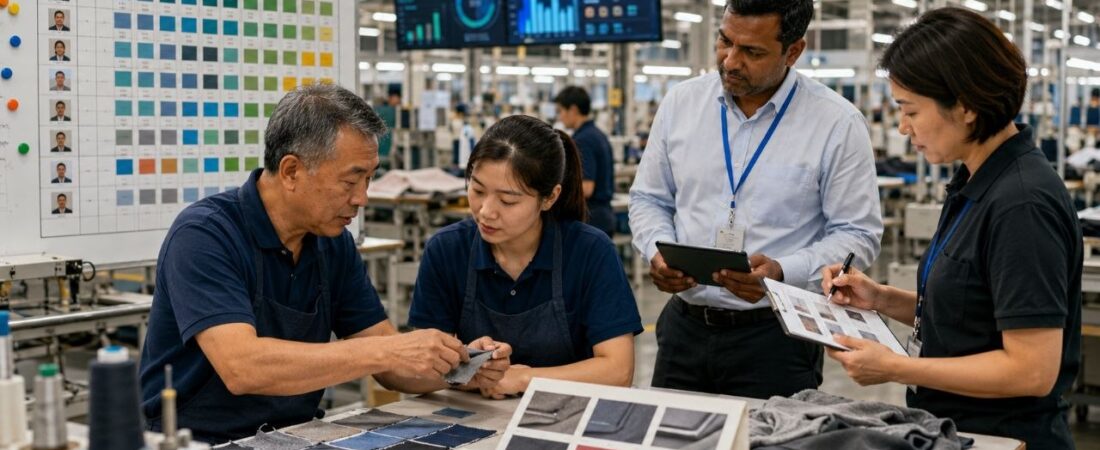
A dashboard can show a number. It cannot teach a new supervisor why an experienced operator, QA chief, mechanic, or line leader made the right call. Before buying another AI dashboard, I would first check whether the factory can capture the decisions that its best people already make every day.
The mistake factories usually make
The common mistake is to digitize the result and leave the judgment undocumented. A line may be late, a defect may repeat, or a style may slow down. But the important knowledge is often the reason behind the call: fabric behavior, machine sound, handling method, buyer sensitivity, rework risk, or when to escalate.
What I would check before approving budget
- Which operation depends on senior-worker know-how, not only written SOPs?
- Can the factory store real examples: good samples, bad samples, borderline defects, rework calls, mechanic fixes, and supervisor notes?
- Will the system help a weaker team make a better decision next time, or only report that it performed badly?
Vendor proof requests
- Show how one expert decision becomes a training note, photo example, SOP update, QA rule, or coaching prompt.
- Show how conflicting opinions from QA, production, and mechanics are reviewed by a person instead of averaged into vague AI advice.
- Prove one practical result: faster onboarding, fewer repeated defects, better escalation accuracy, or fewer avoidable rework cases.
Pilot gate: GO / HOLD / REDESIGN
GO if the pilot captures judgment that weaker teams can reuse. HOLD if evidence exists but nobody owns the training loop. REDESIGN if the project only adds another dashboard without transferring skill.
Factory example: the dashboard cannot explain the supervisor’s call
Think about a borderline seam defect on a difficult fabric. The dashboard may show the defect count. But the useful learning is the supervisor’s reason: whether the issue came from tension, handling, needle condition, bundle waiting, operator change, or a buyer-sensitive finish standard.
If that reason stays verbal, the next line repeats the same mistake. If the factory captures the example, it can become a short training note, a photo pair, a first-hour QC check, a mechanic check, or an escalation rule.
- Good signal: the factory stores examples, judgment rules, rework choices, and escalation triggers.
- Weak signal: the system reports poor performance but cannot teach the weaker line what the stronger line did differently.
- Pilot rule: measure whether repeated defects, onboarding time, or escalation accuracy improves after the know-how is captured.
Many factories start their AI journey by asking for a dashboard.
They want one screen for production status, quality alerts, downtime, labor efficiency, delivery risk, energy use, or material flow. That can help. But more data does not automatically create better factory judgment.
But in many labor-intensive factories, the deeper problem is not the lack of dashboards. The deeper problem is that critical factory knowledge still lives inside people’s heads.
A senior operator may know when fabric will stretch. A line leader may know which operation will slow down after a style change. A QC inspector may know when a small issue will become buyer-sensitive. A mechanic may hear a machine problem before the dashboard sees downtime.
These judgments are valuable. But if they are not captured, transferred, and converted into repeatable signals, AI systems cannot learn from them. Factory AI skill transfer is therefore not a soft training topic. It is a readiness layer for reliable factory AI.
Before a factory adds another dashboard, it should ask a more basic question: can our best operational knowledge be transferred, verified, and reused?
Why a dashboard is not enough
Dashboards can make factory information visible. They can summarize output, efficiency, defect rates, downtime, WIP, attendance, or energy use. But a dashboard usually shows what happened. It does not automatically explain why it happened.
For example, a production dashboard may show that one line fell behind target after lunch. The reason may not be obvious from the number itself. The delay could come from a difficult operation, a material handling issue, an operator skill gap, a missing attachment, unclear QC feedback, excessive bundle waiting, or a style change that was underestimated during planning.
If the factory has not captured these operational explanations, the dashboard becomes a reporting tool, not a learning system. This is why factory AI readiness measurements should include the human and process context behind the number, not only the final result.
AI has the same limit. It can find patterns in data, but it cannot guess the factory’s unwritten rules. It needs labeled examples, clear definitions, decision rules, exception records, and feedback from people who understand the work.
Without that layer, AI may generate recommendations that look smart but do not match factory reality.
The knowledge often lives in people, not systems
In many factories, the most important knowledge is not written in the official SOP. It is carried by experienced workers, supervisors, technicians, merchandisers, production planners, and QC teams.
This includes knowledge such as which materials need extra handling care, which operations are difficult for new workers, which defect types are likely to become buyer-sensitive, which machine conditions create recurring quality problems, and which small warning signs usually appear before a bigger issue.
This is not vague “experience.” It is operating intelligence. But when it stays informal, new people learn slowly and digital systems cannot use it.
A factory may have years of experience, but if that experience is not converted into a repeatable format, the factory cannot build a reliable AI layer on top of it.
SOPs help, but they do not capture every judgment
Standard operating procedures are important. They define how work should be done under normal conditions. Lean manufacturing also treats standardized work as a foundation for stability and improvement.
But factory AI readiness requires more than a normal-condition SOP. A typical SOP may say how to perform an operation, what tools or machines are required, what sequence should be followed, and what quality standard should be checked.
That is useful, but real production also needs judgment. People need to know what to do when the fabric behaves differently, when to stop and call a supervisor, how to judge a borderline defect, when rework is acceptable, and which problems must be recorded as evidence.
These exception-handling rules are where much of the factory’s practical intelligence lives. If they are not captured, the factory may train workers through repetition and verbal instruction, but it will struggle to create AI-ready knowledge.
Skill transfer is an AI readiness layer
Factory AI skill transfer means more than employee training. It means turning factory know-how into a structure that can be taught, checked, recorded, compared, improved, and eventually used by digital or AI systems. In practical terms, factory AI skill transfer turns human judgment into reusable operating evidence.
This does not require a complex software platform at the beginning. A factory can start with simple tools: training checklists, photo examples, short video clips, defect classification sheets, exception logs, supervisor approval notes, before-and-after improvement records, skill matrices by operation, and rework decision records.
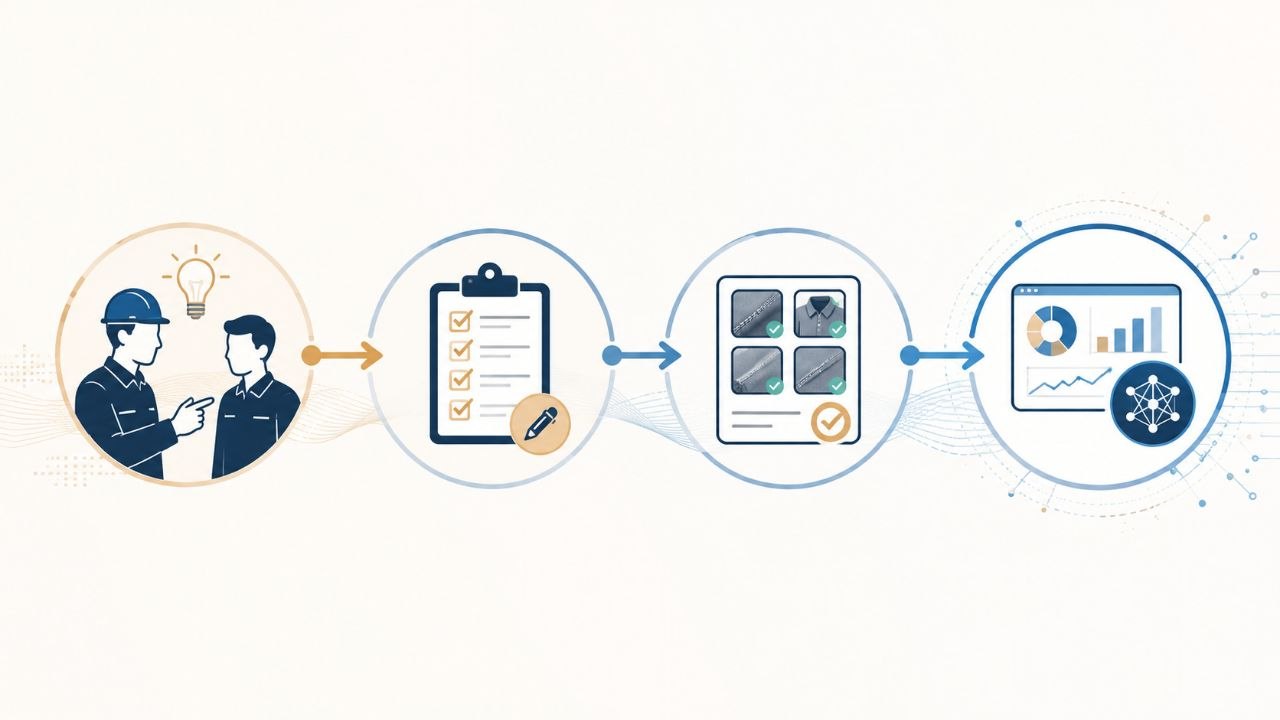
The goal is not to document everything. The goal is to capture the knowledge that changes quality, cost, speed, safety, delivery, or buyer confidence. Once that knowledge is structured, AI tools have something useful to support.
What I would want to see after two weeks
- Three to five real defect or operation examples captured with photos, notes, and the final decision.
- A simple skill matrix that says who can do the operation alone, who needs support, and who can train others.
- One clear escalation rule: when the operator continues, when QC decides, when the mechanic checks, and when the supervisor stops the line.
- A short result check: did onboarding, first-hour defects, repeated rework, or escalation speed improve?
If those items are missing, the factory may have a dashboard project, but it does not yet have a skill-transfer system.
Seven factory signals to capture before AI
A factory does not need to capture every conversation or every action. But it should identify the knowledge signals that affect operational decisions.
1. Operation Difficulty
Some operations are simple. Others require experience, special handling, or additional checking. Factories should record which operations are difficult and why: difficult material handling, high-precision assembly, recurring rework risk, alignment-sensitive steps, frequent operator changeover issues, or a history of quality problems.
Without this signal, an AI system may treat all operations as equal, even when the factory knows they are not.
2. Skill Level by Operation
A general worker skill score is not enough. A worker may be strong in one operation and weak in another. A technician may understand one machine type but not another. A QC inspector may be experienced with one product category but less confident with another.
A practical skill matrix can start with simple levels: can observe, can perform with support, can perform independently, can train others, and can handle exceptions. This turns training status into factory data and helps AI-supported planning avoid unrealistic labor assumptions.
3. Exception Conditions
Many factory problems happen when normal conditions change. Material behavior changes, trims arrive late, machine settings need adjustment, buyer comments change inspection priority, or a new operator is assigned to a difficult operation.
Factories should record exception conditions in simple language. The key question is: what condition changed, and what decision did the factory make because of it?
4. Defect Judgment Rules
Quality inspection is not only about seeing defects. It is about judging severity, repeatability, buyer sensitivity, and corrective action. Factories should capture defect type, defect severity, photo examples, accepted versus rejected examples, rework decisions, recurrence patterns, and final approval records.
This is especially important before using AI visual inspection. Computer vision systems need clear defect taxonomy and ground truth examples. If human inspectors are inconsistent, AI inspection will also become unstable.
5. Rework and Escalation Decisions
Rework is a major source of hidden cost, but many factories do not record why rework decisions were made. They may record the defect count, but not the decision path.
Useful questions include: who approved the rework, whether the issue was one-piece or batch-level, whether the root cause was material, machine, method, manpower, or measurement, and whether the same problem appeared again. This information helps AI systems distinguish isolated defects from process-level risks.
6. Senior Operator Know-How
Some factory knowledge comes from years of experience: how to feel material tension, how to recognize a machine sound, how to handle difficult edges, how to prevent distortion, or how to judge whether a bundle flow problem will affect output later.
This knowledge is difficult to capture, but not impossible. Factories can use short demonstrations, annotated photos, “what to watch for” notes, common mistake examples, supervisor interview sheets, and before-and-after examples. The purpose is not to replace senior workers. The purpose is to reduce dependency on undocumented experience.
7. Training Verification Evidence
Training is often recorded as attendance. But attendance does not prove skill transfer. For AI-ready operations, factories should capture evidence that training changed capability: sample work review, supervisor confirmation, operation-specific approval, independent attempts, first-hour quality checks, and follow-up review after several production days.
This creates a more reliable training record and helps leaders understand whether a problem is caused by a training gap, process issue, material issue, or management issue.
A garment line example
Consider a labor-intensive factory preparing a new line for a style or product that uses a sensitive material. The factory may already have a production plan, target output, operation breakdown, machine list, and QC standard.
But the real risk may sit in the knowledge transfer layer. The senior operator knows that the material distorts if handled too aggressively. The QC inspector knows that a small visual issue becomes more visible after finishing. The line leader knows that one operation usually slows down when a new worker is assigned. The technician knows that a setting needs closer checking than usual.
If these points stay verbal, the factory depends on memory and supervision. If they are captured, the factory can create a handling note, short training clip, operation-specific skill check, defect photo example, first-hour QC checkpoint, supervisor escalation rule, and rework decision record.
This is not only training documentation. It is the beginning of AI-ready operational knowledge. It also connects naturally with visible process limits, because hidden judgment must be turned into visible shop-floor signals before AI can support decisions.
How skill transfer becomes AI-ready data
Factories often think AI-ready data means digital data. But digital format alone is not enough. A spreadsheet full of unclear entries is not AI-ready. A dashboard with inconsistent definitions is not AI-ready. A training log with only attendance dates is not AI-ready.
AI-ready knowledge has several qualities: the meaning is clear, the categories are consistent, the decision rule is visible, the evidence is attached, the responsible person is known, and the result can be checked later. These principles also align with broader AI risk-management thinking, where documented context, governance, and monitoring matter before AI systems are trusted in operation. The NIST AI Risk Management Framework is one useful reference for that discipline.
For example, “operator trained” is weak data. A stronger record would say: operator trained on a specific operation, material handling risk explained, approved sample completed, supervisor verified independent work, first-hour defect check passed, and follow-up review scheduled after two days.
This kind of record gives the factory a much better foundation for AI-supported decisions. It also makes factory AI skill transfer measurable instead of depending only on verbal confirmation.
What goes wrong when the skill layer is skipped
If a factory skips skill transfer and moves directly to AI dashboards, several problems can appear. AI recommendations may ignore practical constraints. Dashboard numbers may show symptoms without capturing root causes. Training gaps may be mistaken for worker performance problems. Defect patterns may be recorded without the human judgment needed to classify them.
The factory may appear digital, but the real operating intelligence remains undocumented. That creates a fragile foundation for factory AI. A stronger factory AI skill transfer layer helps dashboards explain operating causes instead of only displaying symptoms.
Simple factory checklist before buying another dashboard
Before adding another dashboard or AI tool, factory leaders can ask these questions:
- Which operations depend heavily on senior worker know-how?
- Which defects require judgment, not just detection?
- Which exceptions are handled verbally today?
- Which training records prove capability, not just attendance?
- Which process decisions require supervisor approval?
- Which rework decisions are recorded with cause and evidence?
- Which skill gaps affect output, quality, or delivery risk?
- Which examples should be captured as photos or short videos?
- Which knowledge should be standardized before AI tools use it?
- Which human decisions should remain reviewed before automation?
If the factory cannot answer these questions, another dashboard may only make weak knowledge more visible. The factory needs a knowledge-capture layer first.
Factory AI starts with transferable knowledge
The future of factory AI will not be built only on sensors, dashboards, robots, or software platforms. It will also be built on the factory’s ability to capture and transfer its own operating knowledge.
In labor-intensive manufacturing, the most important intelligence is often distributed across operators, supervisors, technicians, QC inspectors, planners, merchandisers, and managers. AI can support these people, but it cannot automatically extract decades of practical experience from silence.
Factories that want better AI should start by asking what their best people know, where that knowledge is used, how it is transferred, how it is verified, how it is recorded, and how it can become a repeatable signal.
A dashboard can show factory performance. Skill transfer explains how the factory actually works. That is why factory AI skill transfer should come before the next dashboard.
External validation anchors for factory skill transfer
- ILO textiles, apparel, leather and footwear resources — relevant for labor-intensive production realities and workforce skill systems.
- NIST AI Risk Management Framework — useful for accountable AI systems that support human judgment rather than replacing it blindly.