Factory AI Atlas · Practical Guides
Use the guides when a factory AI idea needs an operating plan.
Guides translate Factory AI, Physical AI, robotics, data readiness, and apparel automation into step-by-step decisions. They are built for managers who need to decide what to prepare, what to test, what to ask vendors, and what to avoid before spending capital.
Visual guide path
Move from concept to pilot with a readable sequence.
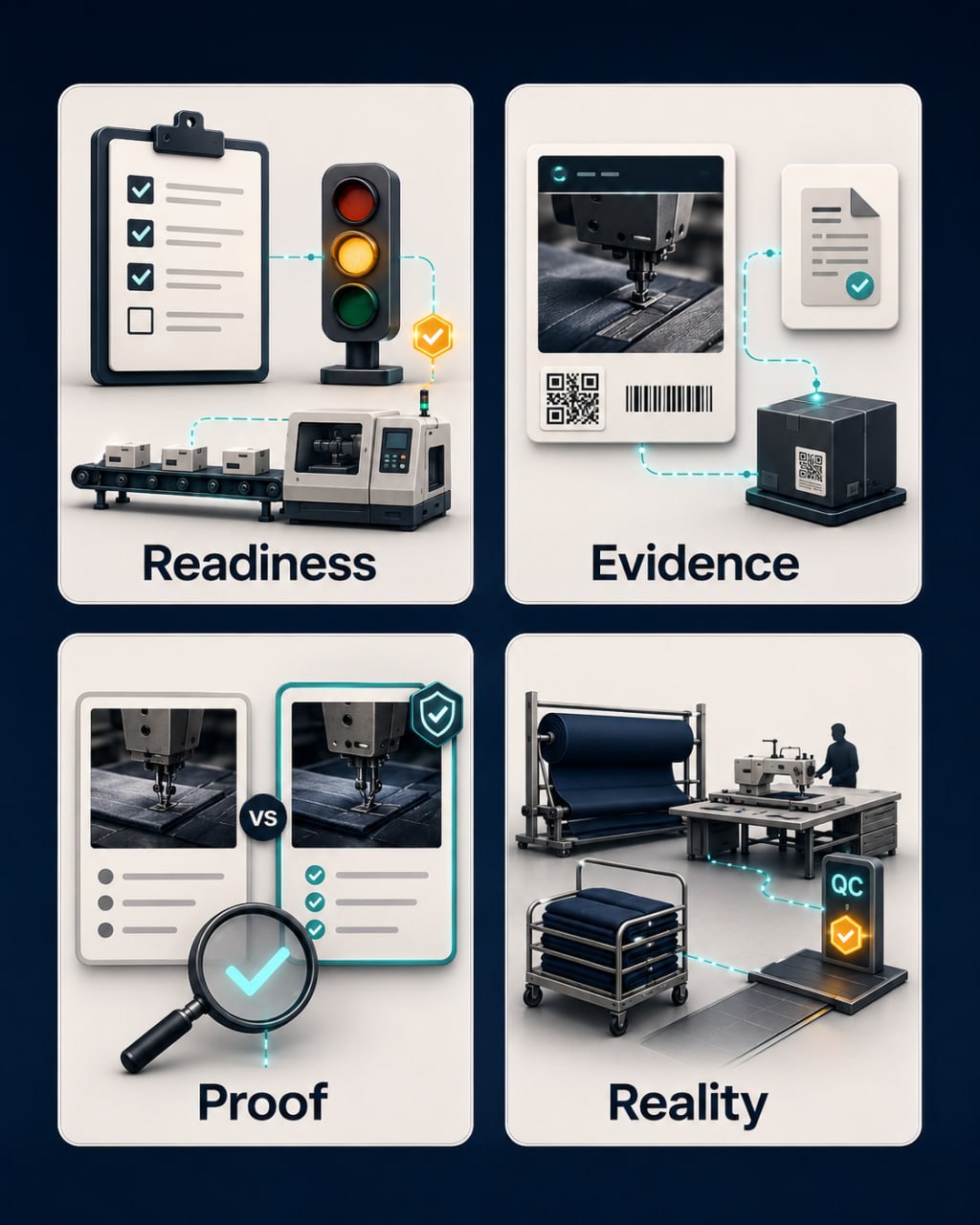
Use the guides to understand the layer, assess readiness, prioritize the use case, evaluate vendors, then design a smaller pilot that produces evidence.
How to use this page
Pick the guide by the decision you need to make.
Separate chips, edge AI, robots, software, and factory workflow before comparing tools.
Confirm visibility, data quality, acceptance criteria, ownership, and safety gates.
Question hidden costs, baseline assumptions, utilization, downtime, and changeover impact.
Choose a low-risk test that creates evidence instead of a hard-to-reverse showcase project.
Foundation guides
Start here before comparing vendors or platforms.
These guides explain the Factory AI stack and why readiness, workflow, and physical constraints matter before software or robot selection.
What Is Physical AI? A Practical Guide for Smart Manufacturing Readers
Use this guide to understand why AI that acts in the physical world needs sensors, equipment context, safety rules, and operational feedback loops.
Read guide →Market Maps
Use the market-map hub to place vendors and technologies into layers: chips, edge, robots, factory systems, and operation-specific tools.
Compare layers →Factory AI Readiness Hub
Use the hub when the main question is not “which tool is best?” but “is this process ready for a reliable AI or robot pilot?”
Open hub →Readiness & ROI guides
Turn interest into a pilot gate, not a shopping list.
This cluster is for teams that already see a possible use case and need to test whether the factory conditions support a pilot.
Factory AI Readiness Scorecard
A practical assessment for deciding whether an AI or robotics use case is pilot-ready, needs preparation, or should be avoided for now.
Use scorecard →Factory AI Readiness: 5 Validation Gates
Check visibility, acceptance tests, execution specs, permission layers, and evidence logs before a pilot starts.
Review gates →7 Things to Check Before Calculating Robot Automation ROI
Use this before ROI math hardens into a budget request. It focuses on baselines, hidden costs, uptime, changeovers, and maintenance reality.
Check ROI assumptions →Checklist Library
Use checklists when you need a fast operating question set before a vendor meeting, pilot review, or internal readiness discussion.
Open library →Garment field lens
Use apparel factories as a stress test for Factory AI claims.
Garment operations expose the hard parts of physical automation: flexible materials, style changeovers, manual judgment, data gaps, buyer compliance, and line-balancing reality.
GSD SAM SMV: Apparel Factory AI’s Data Layer
Shows how standard-time data can connect costing, capacity planning, ME/IE review, and automation ROI.
Read field guide →AI Apparel Costing: Support ME and IE Teams
Use this guide to keep AI costing as scenario support while standard-time governance remains with ME/IE teams.
Read costing guide →Jumper Pool System for Garment Factories
Use this guide when flexible operators need rules, skills data, deployment triggers, and ME/IE oversight instead of informal firefighting.
Read jumper pool guide →Sewing Line Layout for Garment Factory Flow
Use this guide to compare long lines, zigzag mini lines, and U-lines before changing machine placement or piloting AI-assisted control.
Read layout guide →Broken Needle Traceability as a Readiness Gate
A practical example of how audit-control data becomes a foundation for future factory intelligence.
Read guide →What Garment Factories Should Automate Before Robotic Sewing
Use this to sequence WIP visibility, cutting, AI inspection, digital skills, and connected machines before difficult sewing robotics.
Review sequence →Vendor decisions
Ask better questions before the demo becomes the project.
These guides help factory teams compare claims against real workflow, operating ownership, data capture, safety, maintenance, and expected evidence.
Before Buying Apparel Automation: 12 Vendor Questions
A field checklist for machines, robots, AI vision, and support automation before buying decisions are locked in.
Ask these questions →Factory Mobile Robots: Checks Before Choosing AGV, AMR or Cleaning Robots
Compare route discipline, floor conditions, safety, maintenance ownership, and evidence quality before choosing mobile robots.
Compare robot options →Cleaning Robot Maintenance: SOP Checks for Garment Factories
Use this after a cleaning robot pilot to define brush checks, thread-entanglement control, sensor cleaning, error logs, and daily ownership.
Review maintenance SOP →Budget approval, vendor shortlist, robot demo, pilot charter, data-platform purchase, or factory-readiness review.
You need a quick yes/no operating gate, a vendor-question sheet, or a meeting-ready assessment format.
Guide library signal
The guides are meant to explain decisions before the checklist stage.
Factory AI Atlas guides give readers the context behind a pilot, vendor comparison, ROI review, apparel data layer, or automation sequence. They are not short category fillers; they are designed to help managers, IE/ME teams, quality owners, and technology readers understand why a factory should or should not move forward.
Read a guide when the team needs operating context, then move to Checklists when the decision needs a yes/no gate.
Guides stay vendor-neutral and avoid private factory, buyer, costing, or audit details.
Need the fastest practical route?
Start with the Readiness Hub, use the Scorecard to assess one use case, then use Checklists to prepare vendor questions. Guides provide the explanation behind each step.