Factory decision note
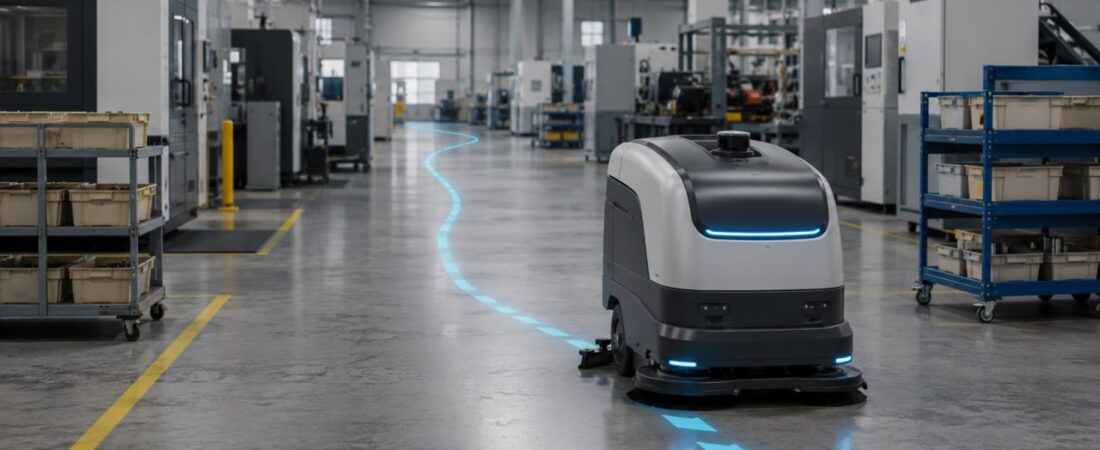
I would not buy a cleaning robot because the demo looks smooth. I would first ask one simple factory question: can this robot finish the same route every day, with real people, carts, lint, water, fabric waste, and blocked aisles in the way?
In many factories, the robot is not the hard part. The hard part is route discipline. Someone must keep the path clear, check the floor, refill or charge the machine, read the stop log, and decide what to do when the robot cannot finish the job.
The mistake factories usually make
The common mistake is to treat cleaning as an easy automation win. If the robot stops every day and nobody owns the response, the factory has not removed work. It has created a new task that nobody manages.
What I would check before approving budget
- Can the robot clean the real route during a normal shift, not only in a clean demo area?
- Can the team see what area was cleaned, what area was missed, and why the robot stopped?
- Who owns charging, water, waste, brush cleaning, route updates, and the daily check?
Vendor proof requests
- Show a route log from our actual floor, with people, carts, WIP, lint, wet spots, and urgent movement present.
- Show a missed-area report and a stop log. Separate route problems, floor problems, safety stops, and maintenance problems.
- Explain the rule for the next step: when to expand, when to pause, and when the route or 5S work must be redesigned first.
Pilot gate: GO / HOLD / REDESIGN
GO if the robot cleans the route and the team can prove coverage, stops, and daily ownership. HOLD if cleaning improves but the owner and response routine are weak. REDESIGN if the robot is mainly exposing blocked aisles, poor 5S, or unsafe movement.
Cleaning robots in factories may look less exciting than humanoid robots or sewing robots. But they can be a good first test for factory automation.
The reason is simple. A cleaning robot has to work on the real floor. It has to follow a route, avoid people and carts, deal with dust or fabric waste, return to charge, and report when it cannot finish.
That sounds basic. In practice, it shows whether the factory has clear routes, clear owners, safe movement, and a daily response routine.
That is why I take cleaning robots seriously. They are not only cleaning tools. They are a small test of whether the factory is ready to manage robots at all.
Why cleaning robots in factories often enter before complex automation
Many factories do not fail at automation because the technology is not impressive. They fail because the operation is not ready.
A sewing robot, inspection AI system, or flexible-material handling robot must handle many variables at once. Fabric moves. Operators adjust. Styles change. Quality standards vary. Production pressure changes hour by hour.
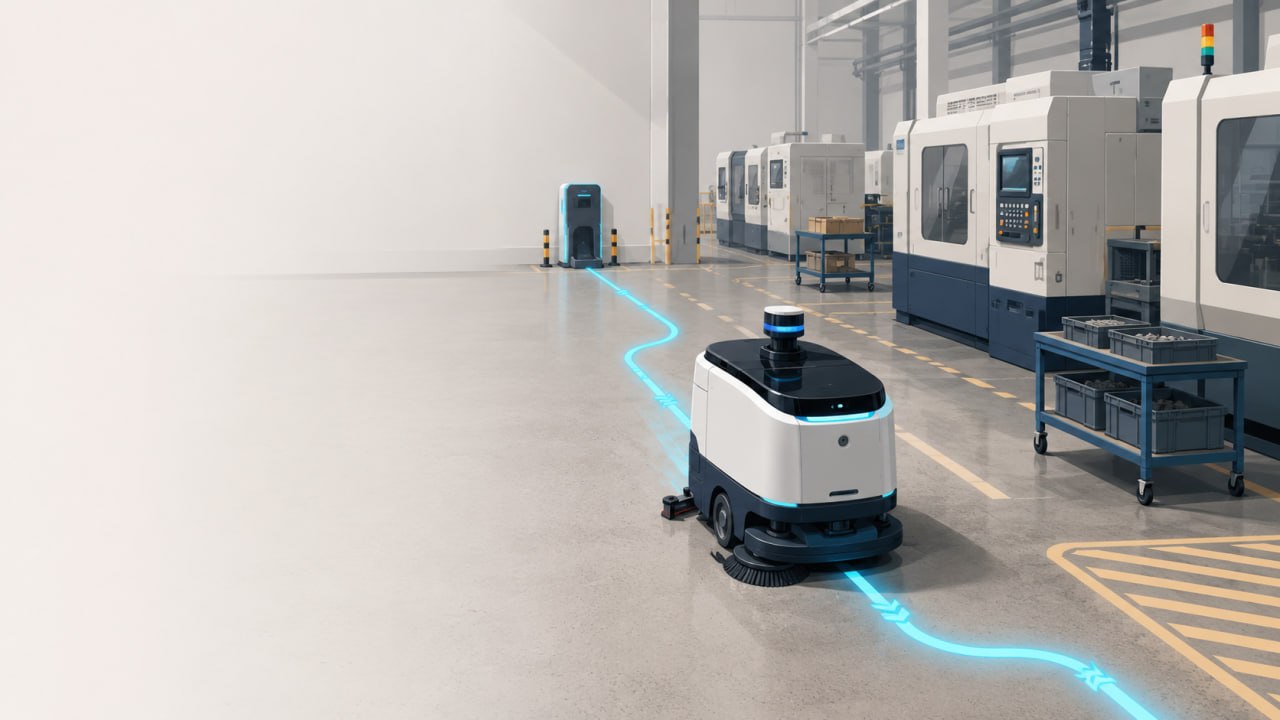
A cleaning robot has a simpler job definition.
It usually needs to:
- follow a defined route,
- avoid people and equipment,
- clean a measurable area,
- return to a charging location,
- operate at a planned time,
- report exceptions or require human support when blocked.
That does not make the task easy. But it makes the task easier to define.
This matters because one of the most important questions in factory automation is not “Can a robot do something?” It is “Can the factory define the job clearly enough for a robot to repeat it every day?”
Cleaning gives managers a practical way to test that question.
The task is stable, but the factory is not
A vendor demonstration may show a cleaning robot moving smoothly through an open space. A real factory is different.
Factory aisles are rarely perfect. Pallets may be left in the wrong place. Fabric carts may block a path. Workers may cross unexpectedly. Floor surfaces may change between zones. Dust, water, oil, thread, lint, packaging waste, and small obstacles may appear during the day.
This is where cleaning robots become interesting.
The cleaning task itself is stable. But the environment around the task is not always stable. A factory that wants to use a cleaning robot must therefore ask practical questions:
- Are the aisles wide enough and repeatable?
- Are temporary obstacles controlled?
- Is the floor surface suitable?
- Is there enough space for the robot to turn?
- Can the robot operate during production hours, or only after shifts?
- Who moves blocked carts or materials?
- Who owns the daily route check?
- Who responds when the robot stops?
These questions sound operational, not futuristic. That is the point.
A robot does not only test technology. It tests whether the factory has standard work, route discipline, ownership, and maintenance habits.
Why the ROI check is easier to explain
Cleaning robots in factories can also be easier to evaluate than complex production automation because the return on investment is more visible.
A factory can start by comparing the robot against the current cleaning operation:
- How many labor hours are currently used for cleaning?
- Which areas must be cleaned daily, weekly, or after each shift?
- Can cleaning move to night shift or non-production hours?
- Are there areas where manual cleaning is inconsistent?
- Does floor condition affect safety, dust control, or audit readiness?
- How much supervision will the robot still need?
- How much time is required for charging, water changes, maintenance, and exception handling?
This is a better starting point than using only a vendor brochure or an ideal demo.
The practical comparison is not “robot versus perfect automation.” It is “robot-supported cleaning versus the current cleaning process.”
For many factories, this makes the business case easier to discuss. The task is repetitive. The labor comparison is visible. The success criteria can be simple: coverage, cleanliness, uptime, safety, and reliability.
Still, a factory should not assume automatic savings. A cleaning robot may reduce some manual cleaning time, but it may also create new work:
- route preparation,
- daily inspection,
- charging and water management,
- brush or consumable replacement,
- exception handling,
- software updates,
- operator training,
- safety supervision.
The right ROI question is not only “How many labor hours can we save?” It is also “What new daily work must we manage?”
Factory readiness check: the route tells the truth
A cleaning robot is useful because it shows factory readiness without touching the sewing line, cutting room, or quality gate first.
If a robot cannot complete a cleaning route because the aisle is blocked, the factory learns something important. If nobody knows who should restart the robot, the factory learns something important. If the charging station is in the wrong place, the factory learns something important. If operators avoid the robot because they do not understand it, the factory learns something important.
These lessons are not failures. They are signals the factory should read before buying more complex automation.
A cleaning robot can help a factory test:
- route mapping,
- obstacle control,
- human-robot interaction,
- charging discipline,
- maintenance routines,
- operator handover,
- safety rules,
- exception management,
- data logging,
- ownership between production, maintenance, and facility teams.
These are the same foundations needed for harder automation projects.
Before a factory adopts AMRs, AI inspection, robotic picking, sewing automation, or flexible-material handling, it should understand whether it can support a simpler robot consistently.
Cleaning robots make that question visible.
Cleaning robots are one member of a broader mobile-robot family. AGVs and AMRs move materials, automated forklifts move pallets, and inspection robots collect safety or maintenance data. Cleaning robots are different because their first value is not material flow but facility readiness: safer floors, better housekeeping, repeatable routes, and a low-risk way to learn robot supervision.
Why this matters for garment and labor-intensive factories
In garment factories and other labor-intensive manufacturing environments, automation is often difficult because the production process includes many human micro-decisions.
Fabric behavior changes. Bundle flow changes. Operators make small adjustments. Quality tolerance depends on the buyer, style, material, and process. A machine may look productive in one step but create imbalance in the full line.
This is why sewing automation is hard.
A cleaning robot does not solve those production challenges. But it can still be useful because it introduces robotics into the factory without touching the most sensitive production operation first.
It gives the team a chance to learn:
- how workers react to robots in the aisle,
- whether routes remain clear,
- how supervisors handle robot stoppages,
- whether maintenance can support daily robot operation,
- whether management can measure performance realistically.
For a garment factory, this may be a better first robotics experience than immediately trying to automate sewing.
The lesson is not that cleaning robots are more important than production automation. The lesson is that a factory can build automation capability step by step.
What can still go wrong on the real floor
Cleaning robots are practical, but they are not magic.
Several problems can appear after the first demonstration:
1. The route is not stable
If workers frequently place carts, pallets, bundles, or tools in the robot path, the robot may stop often. The factory may blame the robot, but the real issue may be route control.
2. The floor is not ready
Uneven surfaces, wet areas, ramps, damaged flooring, or debris can affect performance. A cleaning robot may need better floor management than the factory currently has.
3. Nobody owns the robot
If facility, production, maintenance, and security teams all assume someone else is responsible, the robot will not perform consistently. Every robot needs an owner.
4. Charging and consumables are ignored
A robot that is not charged, cleaned, refilled, emptied, or maintained will quickly become a parked asset.
5. The pilot is measured incorrectly
A short demo in a clean open aisle does not prove daily factory value. The pilot should measure real routes, real obstacles, actual uptime, operator response, and cleaning quality over time.
6. Safety rules are unclear
Robots must operate around people, machines, forklifts, carts, and emergency routes. Even a cleaning robot needs clear safety rules and escalation procedures.
These are not reasons to avoid cleaning robots. They are reasons to pilot them seriously.
What I would want to see after two weeks
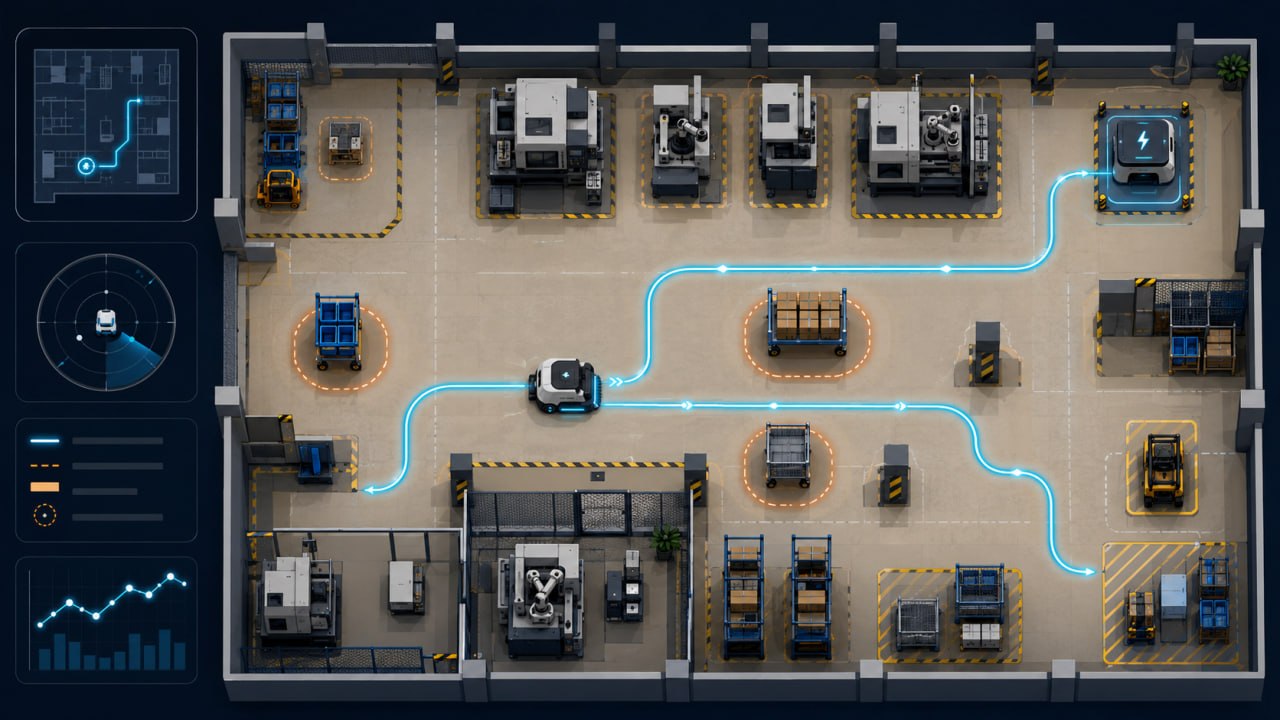
- A simple route map that shows cleaned areas and missed areas.
- A stop log that explains why the robot stopped.
- A daily owner who checks charging, water, waste, brushes, and route changes.
- A short decision: expand the route, hold the pilot, or fix the floor process first.
Cleaning robots in factories: simple checks before buying
Before buying or piloting an autonomous cleaning robot, a factory should answer these questions.
1. What area will the robot clean?
Define the exact zones. Do not begin with “the whole factory.” Start with a realistic route or area.
2. When will it operate?
Will the robot run during production hours, between shifts, at night, or during planned cleaning windows?
3. Is the route clear and repeatable?
Check aisle width, turning space, temporary obstacles, worker traffic, carts, and material flow.
4. What floor conditions exist?
Review floor surface, slopes, wet areas, dust, lint, oil, debris, drains, thresholds, and damaged areas.
5. Where will it charge?
The charging station must be accessible, safe, and protected from being blocked by materials or carts.
6. Who owns daily operation?
Assign a clear owner. The robot should not belong to “everyone.” If everyone owns it, nobody owns it.
7. Who handles exceptions?
Decide who responds when the robot stops, gets blocked, needs service, or reports an error.
8. What metric defines success?
Possible metrics include cleaned area, cleaning frequency, uptime, manual labor hours reduced, complaint reduction, audit readiness, or safety improvement.
9. What manual work remains?
Some corners, stairs, tight areas, or special zones may still need people. The goal is not to pretend the robot replaces all cleaning.
10. What will the pilot teach us?
A good pilot should teach the factory about robotics readiness, not only whether one machine works.
How this connects to Physical AI in plain terms
Physical AI is not only about advanced robots. It is also about machines that must work in a real place, around real people, with real limits.
A cleaning robot is a simple example of this challenge.
A cleaning robot must sense the floor, move safely, avoid obstacles, follow a map, finish the route, and fit into human routines. That makes it a practical example of Physical AI.
That makes it a useful bridge between theory and practice.
For readers who are new to factory robotics, cleaning robots can make Physical AI easier to understand. They show that factory automation is not just about intelligence inside software. It is about whether software, machines, people, spaces, and processes can work together every day.
The bigger lesson: start where the factory can learn safely
Many factories want automation, but they underestimate the learning curve.
A robot project is not only a purchase. It is a change in daily operations.
The factory must learn how to prepare routes, assign responsibility, train operators, maintain equipment, track exceptions, and measure performance. A cleaning robot can expose these issues without risking product quality or stopping a critical production process.
That is why cleaning robots may be a practical first step.
They are not the final goal. They are not proof that a factory is fully automated. They are not a replacement for serious process improvement.
But they can be a useful first robot.
For many factories, the first lesson of automation should not be learned on the hardest process. It should be learned where the task is stable, the risk is lower, and the operating lessons are clear.
Cleaning robots fit that role well.
Sources checked and claim boundary
This article uses public safety and robot-adoption references as background only. They do not prove that one cleaning robot will work in one factory. The factory still needs its own route log, missed-area record, stop log, cleaning result, and safety review.
- OSHA walking-working surfaces guidance — useful for floor condition, safe access, and surface maintenance context.
- OSHA robotics guidance — useful for safety, interaction, and risk control in robot deployments.
- International Federation of Robotics industrial robot resources — useful for broader industrial robot adoption context.
Related reading
- Robot Automation ROI: 7 Proven Checks Before You Invest
- What Is Physical AI? A Practical Guide for Smart Manufacturing Readers
- Factory AI Readiness Hub
- 7 Critical Reasons Garment Factory Automation Is So Difficult
- Cleaning Robot Maintenance: 12 Essential SOP Checks for Garment Factories
Related mobile robot guide
For a broader comparison of factory mobile robot choices, read AGV vs AMR vs Cleaning Robots: Which Mobile Robot Should a Factory Try First?.
Author and factory-operations perspective
Factory AI Atlas is written from a manufacturing operations perspective shaped by hands-on apparel and textile production experience, including overseas factory management, woven and knit operations, production control, quality systems, and operational restructuring.
The site focuses on independent factory judgment, simple evidence checks, and practical ROI questions for AI, robotics, automation, and factory readiness. See the Editorial Policy & Disclaimer for sourcing standards and AI-use disclosure.