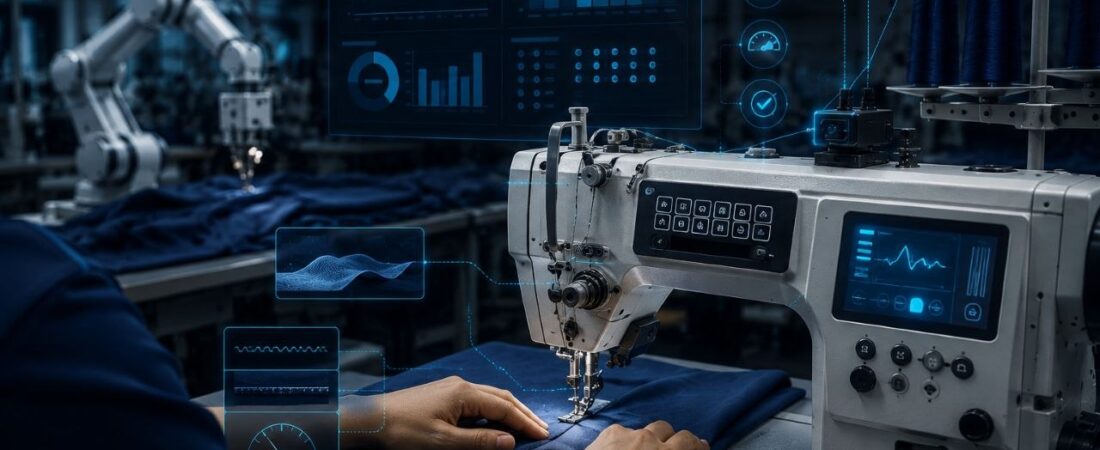
Start with one sewing problem
Do not buy an AI sewing machine because it looks advanced. Start with one sewing problem. For example, the problem may be uneven seam allowance, unstable thread tension, slow changeover, or too much rework.
A smart machine can help the operator control this problem. A sewing robot tries to handle and sew fabric with much less human help. These are different tools for different stages.
What I would check before approving budget
- Which sewing operation needs better control?
- Which defect or delay should become smaller?
- Can the machine work with our real fabric and normal operators?
- Who will control settings, training, and maintenance?
- How will we measure the result before and after the trial?
Simple pilot decision
GO when the machine makes one operation more stable and the factory can measure the result. HOLD when the machine helps, but training or maintenance is not ready. REDESIGN when the plan promises worker replacement without first proving the sewing operation.
For many garment factories, AI-assisted sewing machines will be useful before full sewing robots. They can support operators without changing the whole sewing floor at once.
This is a practical middle step. The factory can improve control, collect useful data, and learn which operations are ready for more automation.
Why sewing robots still struggle with fabric
Fabric is soft and changes shape. It can stretch, fold, slide, or curl. A sewing system must guide the fabric, match two panels, control tension, follow curves, and keep the seam within the quality limit.
A robot may work well in a clean demo. Real production is harder. Fabric weight, stretch, size, trims, seam shape, and quality limits can change from one style to another.
For this reason, sewing robots will usually grow one operation at a time. They will not replace a complete sewing floor in one step.
What an AI-assisted sewing machine can do
Most AI-assisted sewing machines still need an operator. The machine adds digital control, sensors, setting memory, or production data.
Useful functions may include:
- saving settings for each operation;
- automatic thread trimming;
- support for fabric feeding and thread tension;
- detection of fabric thickness or machine problems;
- maintenance alerts;
- production and downtime records.
These functions can reduce repeated adjustment. They can also help a new operator follow a proven setting. But the machine still needs a clear method, good feeding, mechanic support, and quality feedback.
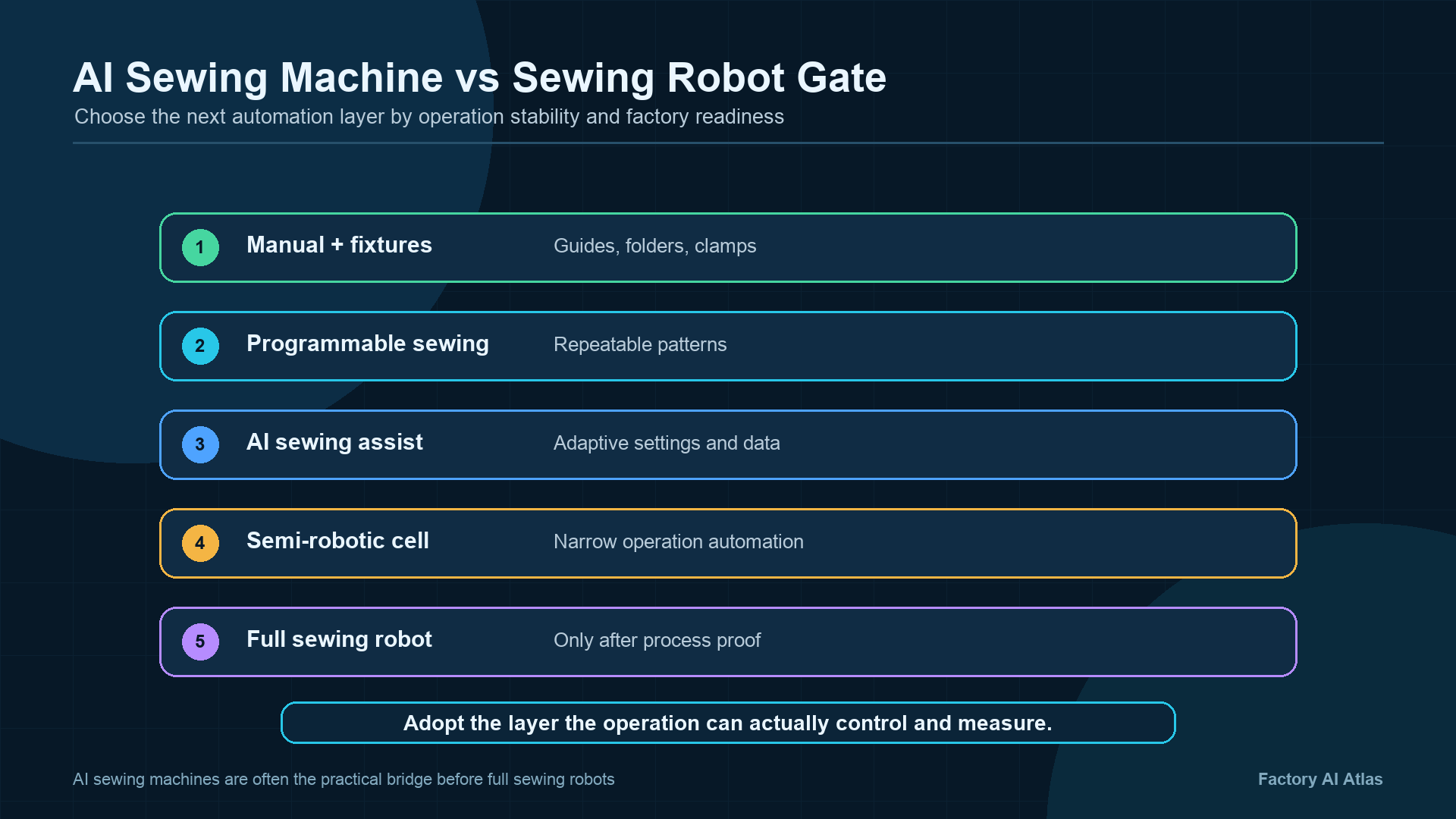
A safer path from manual sewing to robots
- Improve the basic method. Use better guides, folders, clamps, and fixtures.
- Use programmable sewing. Test template or pattern sewing for stable operations.
- Save machine settings. Make changeover easier and more repeatable.
- Connect useful data. Record output, stops, defects, and maintenance needs.
- Add smart support. Use sensors or prompts where they solve a clear problem.
- Test a robotic cell. Choose a stable product or operation with clear limits.
This path is less exciting than a robot video. It is also easier to control in a real factory.
Choose the first operation carefully
The best first test is not the most difficult operation. Choose work that is repeated often and has a clear quality rule.
Possible early tests include:
- template or programmable pattern sewing;
- bartack, buttonhole, button, or label attachment;
- simple hemming or pocket preparation;
- a stable lockstitch or overlock operation with repeated defects;
- a high-volume style family that uses similar settings.
Do not test too many operations at the same time. One clear test makes it easier to see what changed.
Run the trial with normal production conditions
Use current production fabric, normal operator skill, and a real style-change period. A sample-room test is not enough.
Record a simple baseline before the trial:
- actual output;
- defect and rework rate;
- downtime and adjustment time;
- changeover time;
- operator learning time;
- needle, thread, and maintenance problems.
Then compare the same points during the trial. Ask the vendor to show failed cases as well as good cases. The factory needs to know when the machine stops helping.
People and maintenance decide the result
A smart machine does not fix a weak sewing method, poor line balance, unclear quality rules, or missing mechanic support.
Name the owner for each task. The operator may run the machine. The mechanic may protect the settings and repair plan. Industrial engineering may check the method and time. Quality may confirm whether defects really fall. The supervisor must decide what action to take when the machine gives an alert.
Explain the goal to operators. The first goal should be safer and more stable work—not hidden monitoring or wage pressure. Trust is important when the factory asks people to use a new system.
Final factory approval check
I would approve a larger rollout only when the factory can answer five simple questions:
- Did one operation become more stable?
- Did quality or output improve under normal conditions?
- Can an average operator use the machine?
- Can the factory maintain it without daily vendor support?
- Can the same result continue after a style change?
If the answer is yes, the factory has useful evidence for the next step. If not, improve the method, training, maintenance, or test design before buying more machines.
Simple questions about AI sewing machines
Is an AI sewing machine the same as a sewing robot?
No. An AI-assisted machine usually helps an operator. A sewing robot tries to handle and sew fabric with much less human help.
Will these machines replace sewing operators?
In most factories, they will first support operators. They may reduce adjustment, improve consistency, and make training easier.
Which factories should test them first?
Factories with stable style families, clear defect records, trained mechanics, and a measurable sewing problem are better prepared.
How should a factory check return on investment?
Compare the machine cost with real changes in output, defects, rework, downtime, changeover, training, and maintenance. Do not use only the machine’s ideal speed.
Related Factory AI Atlas reading
- Why Garment Factory Automation Is So Difficult
- Factory AI Readiness Hub
- Factory AI Readiness Scorecard
- Robot Automation ROI Checklist
Sources checked and claim boundary
- Research survey on robotic handling of soft materials — background on why fabric handling is difficult.
- ILO textile and apparel resources — industry context for skills and labor-intensive production.
- NIST Manufacturing Extension Partnership — manufacturing improvement and measurement context.
Machine features and results vary by vendor, operation, fabric, and factory. A vendor demo is a starting point, not proof of factory-wide value.
Factory AI Atlas uses an apparel and textile operations view. The goal is to help factories check evidence before they buy, test, or scale AI and automation. See the Editorial Policy & Disclaimer.